Pagliaesque Meaning, Style, and Cultural Impact: The Complete Guide
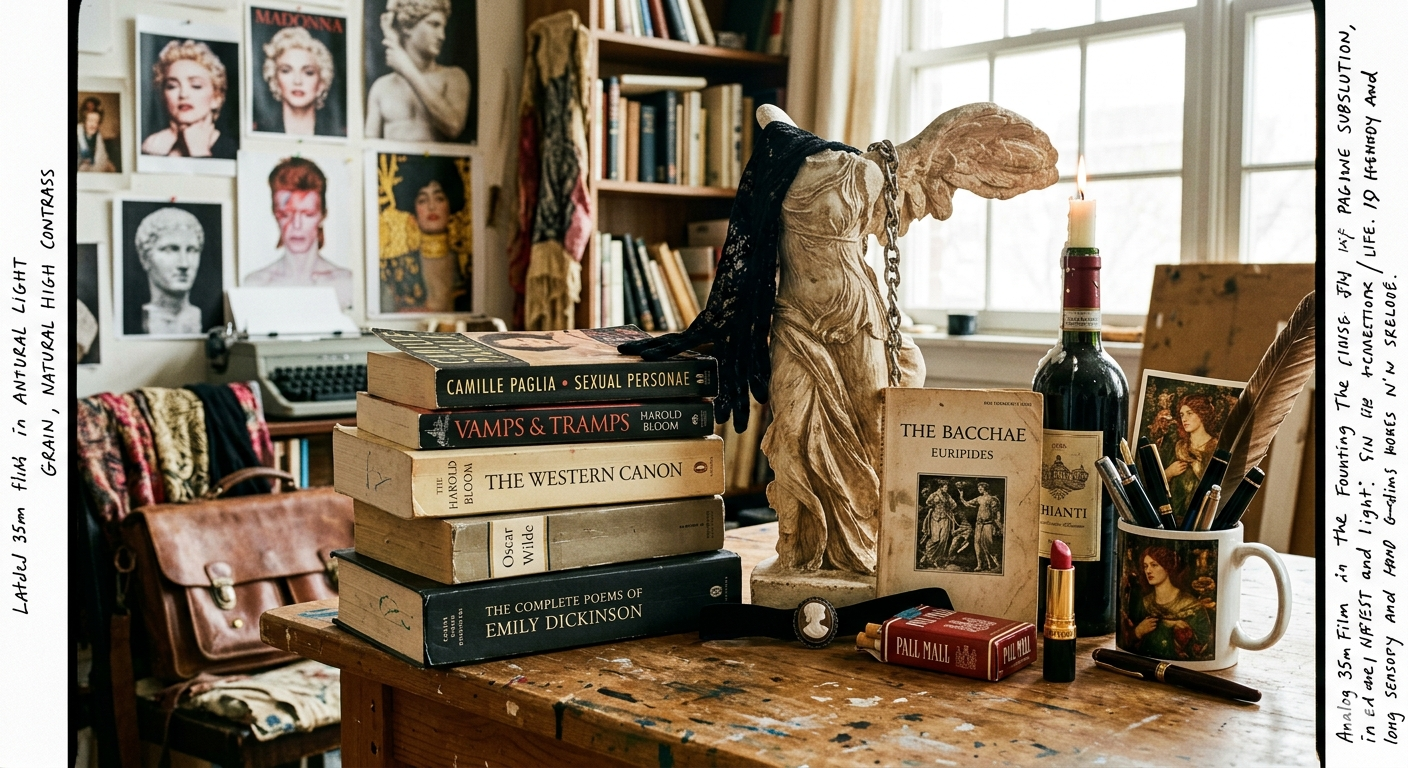
Pagliaesque describes a style of thinking or writing that resembles the sharp, provocative, intellectually aggressive approach associated with Camille Paglia. The term is usually applied to commentary that mixes cultural criticism, psychology, art history, sexuality, politics, and fearless debate into one unmistakable voice.
People use the word when a writer sounds bold. Combative. Highly analytical. Sometimes controversial.
That is the core meaning.
But the term has evolved far beyond one person. Today, “pagliaesque” often signals a broader intellectual style defined by:
- Dense cultural references
- Unfiltered argumentation
- Historical depth
- Anti-conformist thinking
- Theatrical confidence
- Strong rhetorical flair
This guide explains exactly what the word means, where it came from, how it is used today, and why it continues to appear in journalism, literary criticism, academia, and online discourse.
What Does Pagliaesque Mean?
The adjective pagliaesque refers to speech, writing, or analysis that resembles the intellectual style of Camille Paglia.
In practical use, the word usually implies:
| Trait | Meaning |
|---|---|
| Provocative | Challenges mainstream opinions directly |
| Highly educated | Uses history, philosophy, literature, and art references |
| Dramatic | Employs forceful language and emotional intensity |
| Contrarian | Rejects consensus thinking |
| Wide-ranging | Connects multiple disciplines in one argument |
| Stylistically bold | Prioritizes personality and rhetorical power |
A pagliaesque essay rarely sounds neutral.
It pushes. It argues. It performs.
That theatrical edge is a major reason the term survives in modern commentary culture.
Origin of the Word Pagliaesque
The suffix “-esque” means “in the style of” or “resembling.”
So pagliaesque literally means:
“In the style of Paglia.”
The term emerged as critics, journalists, and academics tried to describe the distinctive voice of Camille Paglia during the late 20th century.
Her books, interviews, and lectures developed a reputation for combining:
- Art criticism
- Classical history
- Feminist theory
- Pop culture analysis
- Sexual politics
- Psychoanalytic ideas
The result felt different from standard academic writing.
Readers either admired the intensity or rejected it completely. Very few reactions were mild.
That polarization helped the adjective become culturally recognizable.
Why the Pagliaesque Style Stands Out
Most academic writing aims for institutional neutrality.
Pagliaesque writing does the opposite.
It embraces personality as a weapon.
Instead of hiding the author behind detached language, the writer becomes central to the argument itself. Tone matters. Rhythm matters. Confidence matters.
A pagliaesque argument often includes:
- Historical comparisons
- Sweeping cultural analysis
- Strong opinions stated as certainties
- Criticism of modern intellectual trends
- Unexpected references to mythology, art, or literature
- Emotional intensity mixed with scholarly detail
This creates a reading experience that feels alive rather than clinical.
That energy explains why the term still appears decades after its emergence.
Core Characteristics of Pagliaesque Writing
1. Intellectual Aggression
A pagliaesque writer rarely hedges every statement.
The voice sounds decisive.
Even speculative ideas are delivered with authority. This creates momentum and emotional force, though critics sometimes view it as overly confrontational.
Example traits include:
- Direct challenges
- Sharp rebuttals
- Bold declarations
- Minimal softening language
The style thrives on friction.
2. Massive Cultural Referencing
Pagliaesque analysis jumps across centuries effortlessly.
A single paragraph might connect:
- Ancient Greece
- Renaissance painting
- Hollywood cinema
- Rock music
- Modern politics
This cross-disciplinary movement is one of the style’s defining features.
It creates intellectual density that rewards attentive readers.
3. Rejection of Institutional Conformity
Another hallmark of pagliaesque commentary is skepticism toward dominant academic or political trends.
The style often questions:
- Groupthink
- Ideological purity
- Cultural censorship
- Simplistic moral narratives
That rebellious streak appeals strongly to audiences tired of predictable commentary.
4. Performance-Level Rhetoric
Pagliaesque writing is not merely informational.
It is performative.
Sentences are crafted for impact. Interviews become memorable because the speaker uses rhythm, contrast, exaggeration, and dramatic phrasing intentionally.
That rhetorical intensity separates pagliaesque commentary from ordinary criticism.
Pagliaesque vs Academic Writing
The difference is significant.
| Academic Writing | Pagliaesque Writing |
|---|---|
| Detached tone | Strong personal voice |
| Careful qualification | Bold certainty |
| Narrow specialization | Broad cultural synthesis |
| Neutral presentation | Emotional intensity |
| Technical precision | Rhetorical performance |
| Institutional structure | Individualistic style |
Neither approach is automatically better.
They serve different purposes.
Academic writing prioritizes methodological rigor. Pagliaesque writing prioritizes intellectual force and audience engagement.
How the Word Is Used Today
The term now appears in several contexts.
Literary Criticism
Critics may call an essay pagliaesque when it combines:
- Art theory
- Gender analysis
- Cultural history
- Provocative interpretation
The label often suggests both admiration and controversy.
Journalism
Political commentators sometimes use the term to describe writers who challenge establishment narratives with theatrical confidence.
A pagliaesque columnist is usually:
- Highly opinionated
- Historically informed
- Difficult to categorize politically
Social Media and Internet Culture
Online, the word is sometimes used loosely to describe anyone who delivers:
- Intellectual hot takes
- Long-form cultural analysis
- Contrarian arguments
- Highly stylized commentary
The modern internet rewards strong voices, which helps pagliaesque communication remain relevant.
Common Misunderstandings About Pagliaesque
It Does Not Simply Mean “Controversial”
Many controversial writers are not pagliaesque.
The style requires intellectual layering and cultural depth, not just provocation.
Shock alone is insufficient.
It Is Not Synonymous With Conservative
This misconception appears frequently.
Pagliaesque commentary may criticize progressive institutions, but the style itself is not reducible to a single political ideology.
The defining trait is independence from rigid camps.
It Is Not Pure Academic Theory
Although intellectually dense, pagliaesque writing usually avoids dry academic jargon.
Accessibility matters.
The style aims to engage readers emotionally and rhetorically, not just analytically.
Why Readers Find Pagliaesque Commentary Compelling
Several psychological factors explain the appeal.
Strong Narrative Confidence
Readers naturally respond to conviction.
A pagliaesque voice sounds certain even when discussing complex topics. That certainty creates momentum and memorability.
Intellectual Entertainment
Many readers want analysis that feels energetic rather than sterile.
Pagliaesque writing often reads like a live debate instead of a textbook chapter.
That dynamic quality increases dwell time and reader retention.
Cross-Disciplinary Thinking
The style connects ideas across fields.
This produces surprising insights because the writer is constantly building bridges between:
- Art
- Religion
- History
- Politics
- Pop culture
- Psychology
The result feels expansive rather than compartmentalized.
Criticism of the Pagliaesque Style
The style has critics for understandable reasons.
Common objections include:
| Criticism | Explanation |
|---|---|
| Overconfidence | Arguments may sound overly absolute |
| Excessive provocation | Some readers see theatrics over substance |
| Generalization | Broad cultural claims can oversimplify |
| Polarization | The style often divides audiences sharply |
| Personality dominance | The writer’s persona may overshadow evidence |
These critiques are part of the reason pagliaesque commentary generates strong reactions.
The style is intentionally high-friction.
Semantic Keywords Related to Pagliaesque
Writers and researchers exploring the topic often encounter related concepts such as:
- Cultural criticism
- Intellectual contrarianism
- Rhetorical analysis
- Literary commentary
- Feminist criticism
- Art theory
- Polemical writing
- Public intellectual discourse
- Anti-establishment commentary
- Philosophical journalism
These semantic connections help define the broader ecosystem surrounding the keyword.
Examples of Pagliaesque Elements in Modern Media
You can often identify pagliaesque influence when a commentator:
- Uses ancient mythology to explain current events
- Treats pop culture as serious cultural evidence
- Mixes elite and mass culture freely
- Rejects ideological tribalism
- Speaks with dramatic certainty
- Uses intellectual combat as a rhetorical style
The tone is usually unmistakable once recognized.
Why the Word Continues to Rank in Search Interest
The keyword persists because it satisfies multiple search intents simultaneously.
Users search “pagliaesque” to learn:
- The dictionary meaning
- The cultural context
- The intellectual style
- The literary implications
- The political associations
That layered intent makes the keyword unusually durable in long-term search ecosystems.
It attracts readers from academia, journalism, literature, politics, and internet culture simultaneously.
How to Write in a Pagliaesque Style
Many writers attempt it. Few succeed.
Here are the defining techniques.
Read Across Disciplines
A pagliaesque voice depends on broad intellectual range.
Study:
- Art history
- Classical literature
- Philosophy
- Psychology
- Film criticism
- Political history
Without that foundation, the style becomes empty imitation.
Develop a Distinct Voice
Neutrality weakens this style.
A pagliaesque writer sounds unmistakably individual.
That requires:
- Strong rhythm
- Bold phrasing
- Controlled intensity
- Memorable language
Use Cultural Synthesis
Do not isolate subjects.
Connect them.
A pagliaesque argument gains power by showing how music, politics, sexuality, and mythology intersect inside the same cultural moment.
Avoid Empty Shock Value
Provocation without insight fails quickly.
The best pagliaesque commentary combines:
- Deep knowledge
- Structured reasoning
- Emotional force
All three matter.
Pagliaesque in SEO and Content Strategy
Interestingly, the pagliaesque approach aligns with some modern engagement metrics.
Why?
Because it encourages:
- Longer session duration
- Higher emotional engagement
- More discussion
- More shares
- Stronger reader memory
Search systems increasingly reward content that satisfies users deeply rather than merely matching keywords.
A distinctive voice can outperform generic informational writing when paired with real expertise.
That is one reason personality-driven authority content performs well in competitive niches.
Expert Verdict: When Pagliaesque Thinking Works Best
Pagliaesque analysis works best when a topic benefits from:
- Historical context
- Cultural synthesis
- Strong interpretation
- Intellectual energy
It is particularly effective in:
- Cultural criticism
- Media analysis
- Literary commentary
- Political essays
- Art discussion
The style becomes weaker when precision and restraint matter more than rhetorical force.
Still, its influence remains substantial because readers remember writing that sounds alive.
That is the real power behind the word “pagliaesque.”
It signals more than controversy.
It signals intellectual presence.
FAQs About Pagliaesque
What does pagliaesque mean in simple terms?
Pagliaesque means resembling the bold, provocative intellectual style associated with Camille Paglia. It often describes writing that combines cultural criticism, historical references, and strong opinions.
Is pagliaesque a compliment or an insult?
It can be either.
Some people use it admiringly to praise intellectual fearlessness and originality. Others use it critically to imply excessive provocation or theatricality.
Who is associated with the term pagliaesque?
The word comes from Camille Paglia, a cultural critic known for combining art history, feminism, politics, and pop culture into highly distinctive commentary.
Is pagliaesque writing academic?
Partially. Pagliaesque writing often includes scholarly references and intellectual depth, but it differs from traditional academic writing because it emphasizes personality, rhetoric, and dramatic argumentation.
Why is pagliaesque commentary controversial?
The style frequently challenges mainstream cultural and political assumptions. Its confrontational tone and sweeping claims can create strong disagreement among readers and critics.